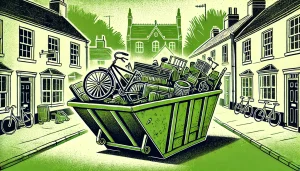
Let’s talk about waste. I know, not the most glamourous topic, but stay with me—this is important.
Imagine this: You’ve just finished tearing up your living room carpet (the one that should have been retired in the ‘90s). Or maybe you’ve just pruned your garden so much that it looks like you’re preparing to film a horror movie called The Revenge of the Shrubs. You’re staring at a mountain of stuff—rubbish, branches, random bits of wood you forgot you had—and now, the big question hits you:
Skip Hire or Tip Run?
These are your two main options when dealing with this kind of waste. But which one is actually better? Which one will save you time, money, and sanity?
Welcome to the ultimate showdown. In the red corner, we have Skip Hire, and in the blue corner, we have The Tip Run. Who’s going to take the crown in this battle of convenience vs. DIY waste management?
Let’s find out.
Round 1: Convenience
Let’s start with the obvious: how much effort are you willing to put into getting rid of your trash?
Skip Hire: The “Set It and Forget It” Method
Skip hire is like the Uber of waste management. You book it, it shows up at your house, you fill it, and then—poof—it disappears, and your waste goes with it. All the heavy lifting (pun intended) is done by someone else. It’s the ultimate “I don’t want to deal with this” solution.
The greatest joy of skip hire? You don’t need to leave your house. You don’t need to pack up your car with bags of junk, drive to the tip, and stand in a queue for 30 minutes behind someone dumping 47 old mattresses. You just fill the skip, wave goodbye to your waste, and get on with your life.
Tip Runs: The DIY Hustle
Now, tip runs are where things get physical. You’re in charge of loading up your car, driving to the tip, unloading, driving back, and repeating this process until either:
- You run out of waste.
- You develop a personal hatred for your own car.
Tip runs are fine if you’re dealing with, say, one or two small loads. But if you’re handling a mountain of waste (and I’m talking full-on “I’m remodelling the house” levels), you’re going to be spending a lot of time driving to and from the tip.
Winner: Skip Hire
Let’s be real—unless you’re someone who loves packing a car with waste (which, if that’s you, cool), skip hire is the hands-down winner here. Convenience is king, and skip hire is royalty.
Round 2: Cost
Okay, next up—how much is this whole thing going to cost you?
Skip Hire: The Upfront Investment
Skip hire involves an upfront cost. You pay for the skip, and that’s pretty much it. You’ve got various sizes to choose from, so you’re not paying for more than you need (as long as you pick the right size). Sure, it can seem expensive at first glance, but when you factor in the time and effort you’re saving, it’s often worth every penny.
Tip Runs: The Seemingly Cheaper Option
At first, tip runs seem like the budget-friendly choice. You’re not paying for a skip, after all. But here’s where things get sneaky. The hidden costs of tip runs start piling up—fuel costs, potential tip fees for certain types of waste, the inevitable cleaning of your car (because your boot is now a landfill), and the time you’re spending doing all of this.
Your weekend? Gone. Your back? Probably sore. Your patience? Running out.
Winner: Skip Hire (for Big Projects), Tip Runs (for Small Loads)
If you’ve got a serious amount of waste, skip hire wins this one. While it costs more upfront, you’re avoiding all those hidden costs and reclaiming your time. For tiny loads, though, a couple of tip runs might be the cheaper bet.
Round 3: Environmental Impact
You want to be environmentally responsible, right? Of course you do. So, how do skip hire and tip runs stack up in the green department?
Skip Hire: The Pros Take Care of It
Here’s the thing with skip hire: your waste is sorted and disposed of responsibly by professionals. Most skip hire companies recycle a large portion of what they collect, meaning your stuff won’t just be sitting in a landfill for the next 500 years. Plus, you’re minimising your car trips to and from the tip, which means fewer CO2 emissions.
Tip Runs: The Wild Card
When you handle your own tip runs, the environmental impact depends on what you do. Are you separating your recyclables? Are you taking fewer trips by packing your car efficiently? If you’re just dumping everything at the tip without a second thought, your environmental scorecard might not be looking too great.
Winner: Skip Hire (in most cases)
Skip hire wins here because the professionals know what they’re doing. They’ll recycle, dispose of hazardous materials safely, and handle the eco-friendly bits so you don’t have to.
Round 4: Hassle Factor
Let’s face it—when it comes to waste management, we all want as little hassle as possible. So which option makes your life easier?
Skip Hire: The No-Hassle Hero
Skip hire is ridiculously simple. It arrives, you fill it, and it’s gone. That’s it. The skip company does all the hard work, and you get back to your day with minimal effort. Plus, they’ll handle the permits if you need to put the skip on a public road, so you don’t even have to worry about that.
Tip Runs: The DIY Nightmare
Tip runs are, by nature, a hassle. There’s no way around it. You have to do multiple trips, deal with loading and unloading, potentially argue with the staff at the tip about what can and can’t be dumped, and then come home to a car that smells like garbage. It’s a high-effort, low-reward situation.
Winner: Skip Hire
Skip hire is basically the waste management equivalent of ordering pizza. It’s just so much easier.
Round 5: Flexibility
Can you work skip hire or tip runs around your schedule? Let’s see.
Skip Hire: The Flexible Friend
Skip hire gives you flexibility. You’ve got a skip sitting outside for several days, so you can take your time filling it up as you go. It’s like having your own personal waste bin ready to go whenever you need it. You don’t have to rush.
Tip Runs: On Their Time
Tip runs require you to work around the opening hours of your local tip, which, by the way, are probably designed by people who hate convenience. Some tips close early, and heaven forbid you try to show up on a Sunday afternoon when they’re closed. You’re on their time, not yours.
Winner: Skip Hire
Skip hire fits around your schedule, not the other way around.
The Final Verdict: Skip Hire vs. Tip Runs
Okay, so who wins the ultimate showdown?
- For small projects, like clearing out a few bags of rubbish, a couple of tip runs might do the trick. It’s cheaper, and if you don’t mind sacrificing some of your time, it’ll get the job done.
- But for anything bigger than that, skip hire takes the crown. It’s easier, faster, and saves you from the logistical nightmare of hauling junk around in your car. It’s a no-hassle, no-brainer solution.
So next time you’re staring at a pile of waste wondering if you should hire a skip or handle it yourself, ask yourself: Do I want to spend my weekend doing tip runs, or do I want to hire a skip, fill it up at my leisure, and get on with my life?
If you’re smart (and lazy, like the rest of us), you’ll go with the skip.
Let’s talk about waste. I know, not the most glamourous topic, but stay with me—this is important.
Imagine this: You’ve just finished tearing up your living room carpet (the one that should have been retired in the ‘90s). Or maybe you’ve just pruned your garden so much that it looks like you’re preparing to film a horror movie called The Revenge of the Shrubs. You’re staring at a mountain of stuff—rubbish, branches, random bits of wood you forgot you had—and now, the big question hits you:
Skip Hire or Tip Run?
These are your two main options when dealing with this kind of waste. But which one is actually better? Which one will save you time, money, and sanity?
Welcome to the ultimate showdown. In the red corner, we have Skip Hire, and in the blue corner, we have The Tip Run. Who’s going to take the crown in this battle of convenience vs. DIY waste management?
Let’s find out.
Round 1: Convenience
Let’s start with the obvious: how much effort are you willing to put into getting rid of your rubbish?
Skip Hire: The “Set It and Forget It” Method
Skip hire is like the Uber of waste management. You book it, it shows up at your house, you fill it, and then—poof—it disappears, and your waste goes with it. All the heavy lifting (pun intended) is done by someone else. It’s the ultimate “I don’t want to deal with this” solution.
The greatest joy of skip hire? You don’t need to leave your house. You don’t need to pack up your car with bags of junk, drive to the tip, and stand in a queue for 30 minutes behind someone dumping 47 old mattresses. You just fill the skip, wave goodbye to your waste, and get on with your life.
Tip Runs: The DIY Hustle
Now, tip runs are where things get physical. You’re in charge of loading up your car, driving to the tip, unloading, driving back, and repeating this process until either:
- You run out of waste.
- You develop a personal hatred for your own car.
Tip runs are fine if you’re dealing with, say, one or two small loads. But if you’re handling a mountain of waste (and I’m talking full-on “I’m remodelling the house” levels), you’re going to be spending a lot of time driving to and from the tip.
Winner: Skip Hire
Let’s be real—unless you’re someone who loves packing a car with waste (which, if that’s you, cool), skip hire is the hands-down winner here. Convenience is king, and skip hire is royalty.
Round 2: Cost
Okay, next up—how much is this whole thing going to cost you?
Skip Hire: The Upfront Investment
Skip hire involves an upfront cost. You pay for the skip, and that’s pretty much it. You’ve got various sizes to choose from, so you’re not paying for more than you need (as long as you pick the right size). Sure, it can seem expensive at first glance, but when you factor in the time and effort you’re saving, it’s often worth every penny.
Tip Runs: The Seemingly Cheaper Option
At first, tip runs seem like the budget-friendly choice. You’re not paying for a skip, after all. But here’s where things get sneaky. The hidden costs of tip runs start piling up—fuel costs, potential tip fees for certain types of waste, the inevitable cleaning of your car (because your boot is now a landfill), and the time you’re spending doing all of this.
Your weekend? Gone. Your back? Probably sore. Your patience? Running out.
Winner: Skip Hire (for Big Projects), Tip Runs (for Small Loads)
If you’ve got a serious amount of waste, skip hire wins this one. While it costs more upfront, you’re avoiding all those hidden costs and reclaiming your time. For tiny loads, though, a couple of tip runs might be the cheaper bet.
Round 3: Environmental Impact
You want to be environmentally responsible, right? Of course you do. So, how do skip hire and tip runs stack up in the green department?
Skip Hire: The Pros Take Care of It
Here’s the thing with skip hire: your waste is sorted and disposed of responsibly by professionals. Most skip hire companies recycle a large portion of what they collect, meaning your stuff won’t just be sitting in a landfill for the next 500 years. Plus, you’re minimising your car trips to and from the tip, which means fewer CO2 emissions.
Tip Runs: The Wild Card
When you handle your own tip runs, the environmental impact depends on what you do. Are you separating your recyclables? Are you taking fewer trips by packing your car efficiently? If you’re just dumping everything at the tip without a second thought, your environmental scorecard might not be looking too great.
Winner: Skip Hire (in most cases)
Skip hire wins here because the professionals know what they’re doing. They’ll recycle, dispose of hazardous materials safely, and handle the eco-friendly bits so you don’t have to.
Round 4: Hassle Factor
Let’s face it—when it comes to waste management, we all want as little hassle as possible. So which option makes your life easier?
Skip Hire: The No-Hassle Hero
Skip hire is ridiculously simple. It arrives, you fill it, and it’s gone. That’s it. The skip company does all the hard work, and you get back to your day with minimal effort. Plus, they’ll handle the permits if you need to put the skip on a public road, so you don’t even have to worry about that.
Tip Runs: The DIY Nightmare
Tip runs are, by nature, a hassle. There’s no way around it. You have to do multiple trips, deal with loading and unloading, potentially argue with the staff at the tip about what can and can’t be dumped, and then come home to a car that smells like garbage. It’s a high-effort, low-reward situation.
Winner: Skip Hire
Skip hire is basically the waste management equivalent of ordering pizza. It’s just so much easier.
Round 5: Flexibility
Can you work skip hire or tip runs around your schedule? Let’s see.
Skip Hire: The Flexible Friend
Skip hire gives you flexibility. You’ve got a skip sitting outside for several days, so you can take your time filling it up as you go. It’s like having your own personal waste bin ready to go whenever you need it. You don’t have to rush.
Tip Runs: On Their Time
Tip runs require you to work around the opening hours of your local tip, which, by the way, are probably designed by people who hate convenience. Some tips close early, and heaven forbid you try to show up on a Sunday afternoon when they’re closed. You’re on their time, not yours.
Winner: Skip Hire
Skip hire fits around your schedule, not the other way around.
The Final Verdict: Skip Hire vs. Tip Runs
Okay, so who wins the ultimate showdown?
- For small projects, like clearing out a few bags of rubbish, a couple of tip runs might do the trick. It’s cheaper, and if you don’t mind sacrificing some of your time, it’ll get the job done.
- But for anything bigger than that, skip hire takes the crown. It’s easier, faster, and saves you from the logistical nightmare of hauling junk around in your car. It’s a no-hassle, no-brainer solution.
So next time you’re staring at a pile of waste wondering if you should hire a skip or handle it yourself, ask yourself: Do I want to spend my weekend doing tip runs, or do I want to hire a skip, fill it up at my leisure, and get on with my life?
If you’re smart (and lazy, like the rest of us), you’ll go with the skip.
Within the body of your blog post lies the heart of your message. Break down your content into coherent sections, each with a clear heading that guides readers through the narrative. Dive deep into each subtopic, providing valuable insights, data, and relatable examples. Maintain a logical flow between paragraphs using transitions, ensuring that each point naturally progresses to the next. By structuring your body content effectively, you keep readers engaged and eager to learn more.
Powerful Closures: Leaving a Lasting Impression
Concluding your blog post isn’t just about wrapping things up – it’s your final opportunity to leave a strong impact. Summarize the key takeaways from your post, reinforcing your main points. If relevant, provide actionable solutions or thought-provoking questions to keep readers thinking beyond the post. Encourage engagement by inviting comments, questions, or sharing. A well-crafted conclusion should linger in your readers’ minds, inspiring them to explore further or apply what they’ve learned.