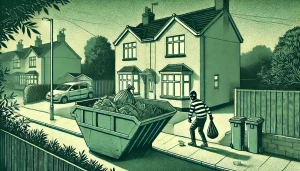
Let’s talk about skips. They’re those big, bulky metal containers that collect everything from the rubble of a bathroom reno to the sad remnants of your IKEA furniture experiments. You pass them every day without a second thought. But what if I told you that some brilliantly creative people in the UK have decided to look at skips and say, “Why should this be just a trash bin? What if it was… a swimming pool? Or a house? Or even an art gallery?”
Sounds ridiculous, right? But it’s real. Welcome to the wonderfully weird world of skips being reimagined in ways that are bizarrely brilliant—far from their humble origins as practical waste containers.
1. Harrison Marshall’s Skip House – A Tiny Home Revolution
Imagine this: London’s housing market is a nightmare. You’re trying to find somewhere to live, but prices are so high that even a broom cupboard feels out of budget. So, what do you do? If you’re artist and architect Harrison Marshall, you don’t bother with traditional flats. Nope—you turn a skip into a house.
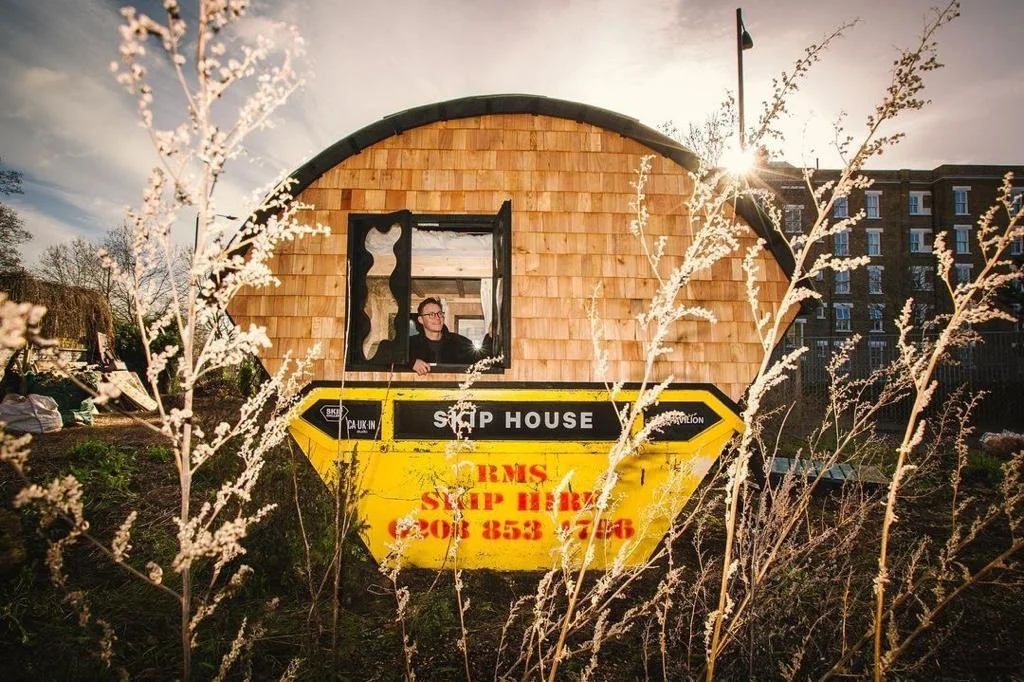
In 2023, Marshall took a standard skip and transformed it into Skip House, a fully functioning, liveable tiny home. It’s got insulation, a bed, a mini kitchen, and even a roof. Parked in Bermondsey, London, this mini home is Marshall’s artistic response to the absurdity of sky-high rents in the city. And while the Skip House might be cosy (read: tiny), it sends a huge message about resourcefulness, sustainability, and the need to rethink urban living
Marshall didn’t just build a home in a skip because it’s cool (though, let’s admit, it kind of is). He did it to shine a spotlight on the growing crisis in affordable housing. Living in a skip might sound absurd, but it’s also a stark reflection of the lengths people may have to go just to survive in cities where rent has spiralled out of control.
2. Oliver Bishop-Young’s Skip Swimming Pools – Dive In!
While living in a skip might not be for everyone, how about swimming in one? That’s right. Oliver Bishop-Young, an artist and skip-enthusiast, took skips and turned them into swimming pools as part of his Skip Conversions project. And these aren’t just conceptual—they’re actual, functional swimming pools filled with water and perfect for a summer dip.
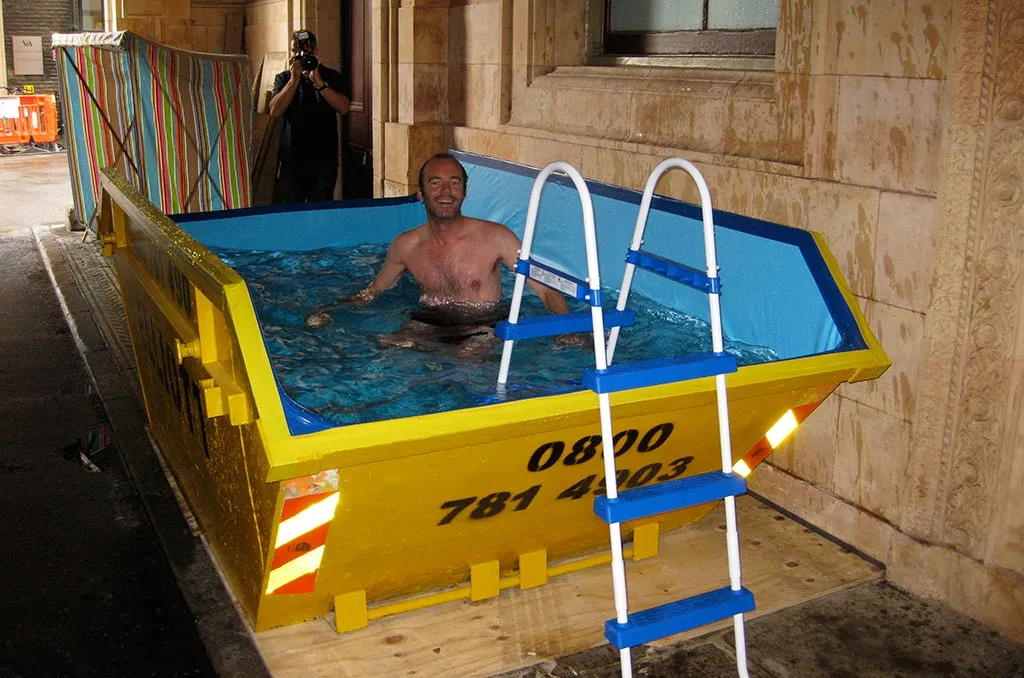
The idea behind Bishop-Young’s project is to make people rethink their relationship with waste. A skip doesn’t have to be a final resting place for debris. It can become something else entirely. By turning skips into pools, Bishop-Young turns waste into fun, quite literally. He even set up skips in urban environments to encourage locals to jump in and enjoy, making these pools playful urban oases
His skip pools were a cheeky way of highlighting the potential that lies in things we typically discard. Plus, there’s something undeniably amusing about the image of people lounging in a skip filled with water, soaking up the sun in what is usually a symbol of urban decay.
3. Skip Garden – Where Trash Meets Green Thumb
Now, let’s get really wild. What if you could grow a garden… in a skip? Welcome to the Skip Garden in London’s King’s Cross, an ingenious project that took skips and turns them into moveable mini-farms. Created by environmental group Global Generation, Skip Garden was all about sustainability, community, and turning waste into growth.
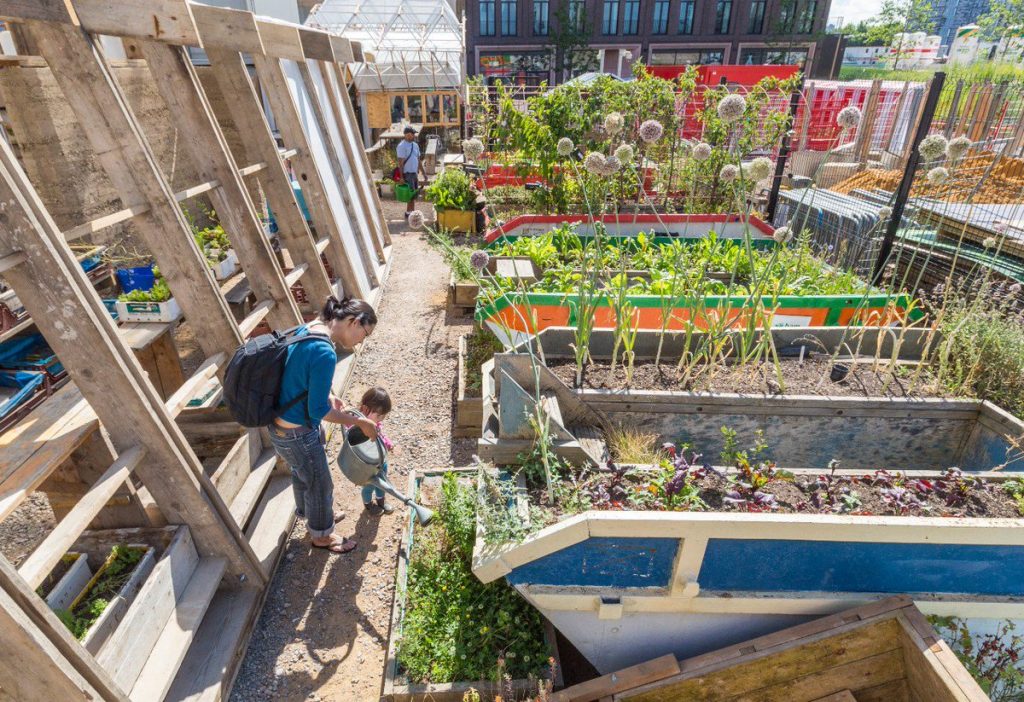
These skips aren’t filled with debris—they’re filled with soil, plants, vegetables, and even beehives. The idea is simple: to turn old, industrial objects into something life-giving. Instead of skips being associated with destruction and decay, they become symbols of renewal, demonstrating that with a little creativity, anything can grow—even in a big metal box.
4. SKIP Gallery – Art in Unexpected Places
Imagine walking down the street and stumbling upon an art gallery full of skips. That’s exactly what London-based SKIP Gallery is all about. Founded by artists Catherine Borowski and Lee Baker, SKIP Gallery transforms skips—those metal boxes we usually associate with waste—into pop-up exhibition spaces. The skips are placed in urban environments and filled with installations by contemporary artists.
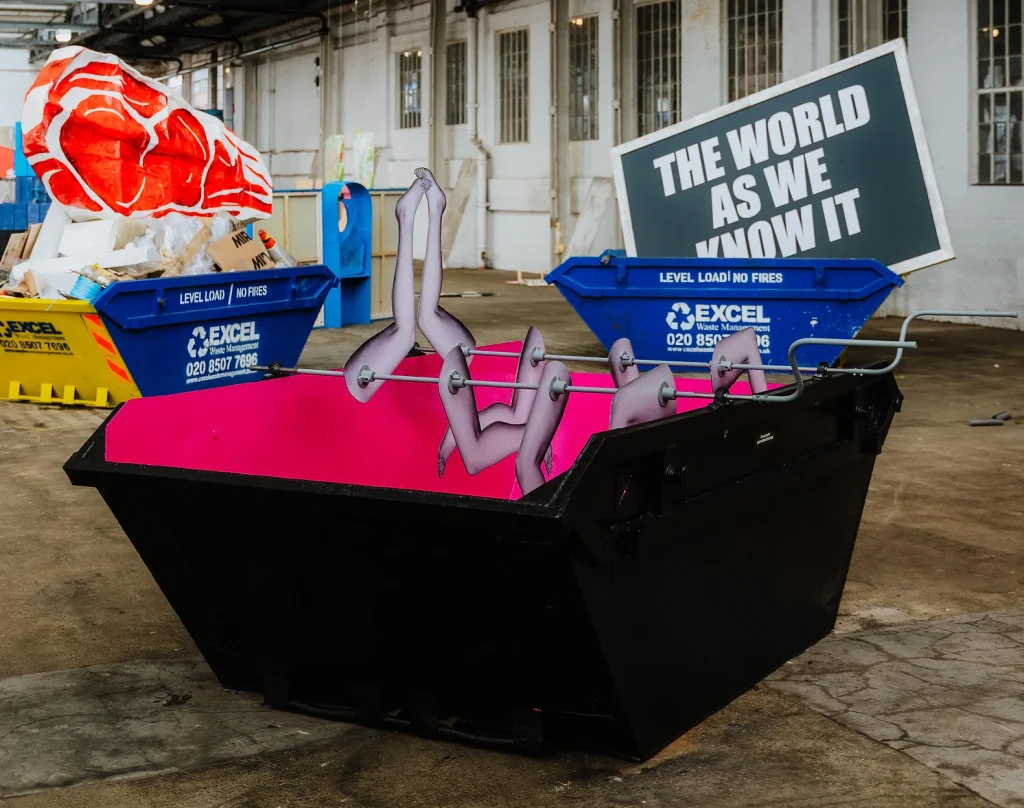
Their mission? To turn the ubiquitous, often overlooked skip into a provocative, mobile art gallery. In our everyday lives, skips represent waste—what we no longer need or want to forget. But SKIP Gallery flips this concept on its head by transforming these containers of disposal into containers of creativity, creating artistic interventions in unexpected urban spaces.
The modified skips are designed to house site-specific artworks. This offers both artists and viewers a fresh take on art, removing it from the conventional confines of galleries and museums, and instead placing it within the fabric of everyday city life. These skips, scattered around urban landscapes, become disruptive and playful environments that force people to engage with art where they least expect it.
The mobile nature of the skip allows for flexibility and innovation in the kinds of projects it can host, challenging traditional notions of where and how art should be consumed. It serves as a democratic platform for diverse artistic expressions, from sculptures to performances, always pushing the boundaries of what an art space can be.
By using an object so deeply embedded in urban renewal and waste, SKIP Gallery presents a stark irony: a vessel meant for demolition becomes a cradle for creation. In doing so, it questions our relationship with the things we throw away and encourages dialogue about consumption, transformation, and renewal.
5. The Fandangoe Skip – Ice Cream and Mental Health Support in a Skip
Finally, let’s dive into one of the most heartfelt uses of a skip: the Fandangoe Skip. Created by print artist Annie Nicholson (aka Fandangoe Kid), this candy-coloured skip was transformed into a mobile ice cream kiosk. But it wasn’t just about serving sweet treats. It was about creating a space for open conversations around mental health, grief, and trauma.
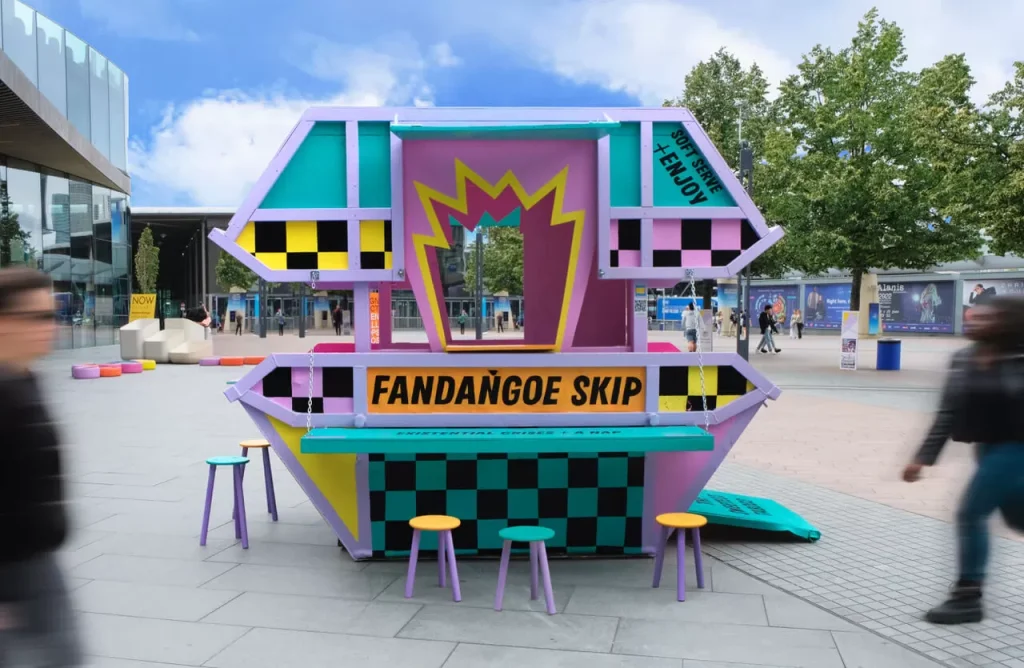
Launched in 2022, the Fandangoe Skip toured iconic London locations like Greenwich Peninsula and Canary Wharf. It offered free scoops of ice cream alongside workshops on mental health, providing a welcoming, non-pressured space for people to engage in meaningful discussions. Bright, colourful, and full of life, the Fandangoe Skip broke down the taboos around heavy topics, showing that even in a skip, there can be healing
The Fandangoe Skip is more than just a clever use of space; it’s a powerful example of how art and community can come together to tackle big issues in innovative, accessible ways.
The Takeaway: Skips Are the New Canvas
Let’s be real—none of us will ever look at a skip the same way again. What was once a dirty metal box full of broken junk is now a swimming pool, a home, a garden, or even a piece of art. And the genius behind these transformations isn’t just in the execution, but in the reimagining of something we all take for granted as rubbish. These artists and innovators have shown us that even the most utilitarian, disposable objects can be repurposed in ways that are creative, inspiring, and often a little absurd (in the best possible way).
So the next time you pass a skip, don’t just see a big trash bin. See the possibilities. Because with the right amount of creativity, anything—even a skip—can become something extraordinary.
Got a project or need a skip for something a little more traditional? GoSkip has got you covered. Whether it’s clearing out your attic or starting your own skip revolution, hire a skip today and see where your creativity can take you.